
Xtandi + Talzenna (enzalutamide + talazoparib, Pfizer) has become the second androgen receptor pathway inhibitor (ARPi) + poly ADP-ribose polymerase inhibitor (PARPi) combination to be approved in mHSPC. [1] The first was J&J’s Akeega, a branded single-pill formulation of abiraterone and niraparib, which was approved in December 2025. While niraparib itself has been branded as Zejula and is widely known as a successful GSK acquisition, J&J has owned the compound’s exclusive rights in prostate cancer since 2016.
J&J ran its pivotal AMPLITUDE trial in homologous recombination repair-mutant (HRRm) mHSPC, but Akeega only managed to show a statistically significant rPFS advantage over abiraterone in patients harboring a BRCA mutation, which was a prespecified subgroup in the trial. [2] In the BRCA subgroup, Akeega achieved a 0.51 hazard ratio for radiographic progression-free survival (rPFS), making it a gamechanger in these patients with a Clinical Innovation score of 25.3%. (Figure 1) Further analysis by the FDA led to an approval in BRCA2 patients only, who constitute a majority of BRCA mutations.
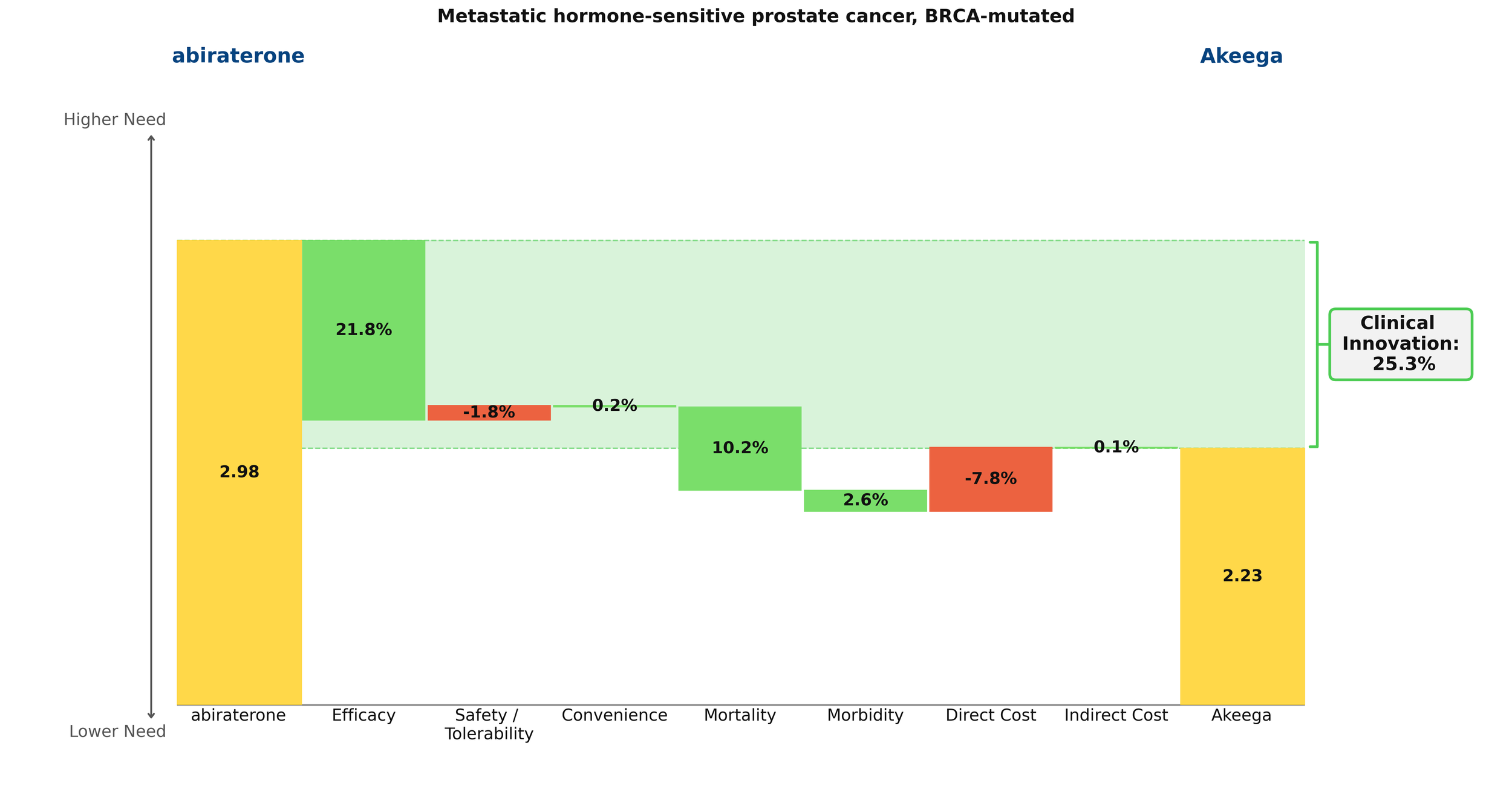
Figure 2: Driver of Clinical Innovation for Xtandi + Talzenna vs Akeega, BRCA-mutant
Pfizer also chose HRRm mHSPC as the patient population for their pivotal TALAPRO-3 trial. [3] Unlike Akeega, however, the Xtandi + Talzenna combination was able to show a significant efficacy benefit regardless of BRCA status. Looking first at the BRCA subgroup, adding Talzenna to Xtandi resulted in a 0.37 rPFS hazard ratio against Xtandi alone, an effect size with a confidence that intersects with that of Akeega. The result is a slight 2.7% Clinical Innovation score against Akeega, implying the two combinations are not significantly differentiated from one another in this BRCA subgroup. It is important to note that in this analysis, the projected generic price of Xtandi was used, as it will be going off-patent in August 2027.
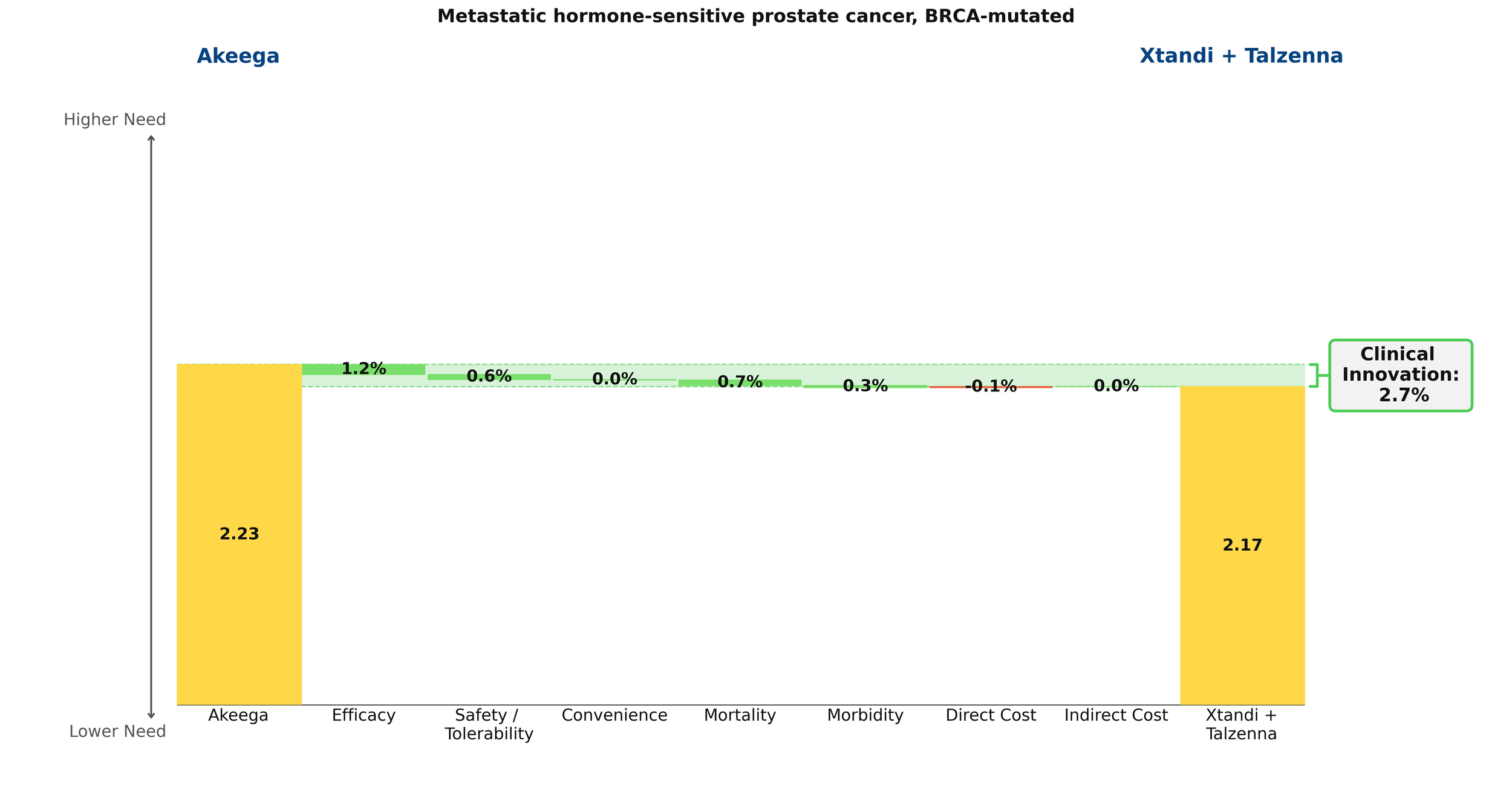
Figure 2: Driver of Clinical Innovation for Xtandi + Talzenna vs Akeega, BRCA-mutant
Xtandi + Talzenna’s benefit extended beyond just BRCA patients; it reached a 0.57 rPFS hazard ratio in the non-BRCA subgroup when compared with Xtandi alone, with a confidence interval that once again overlaps with what Akeega managed to post in the BRCA subgroup. (Figure 3) These results provide strong evidence for the use of Talzenna in all HRRm mHSPC patients that are able to tolerate it.
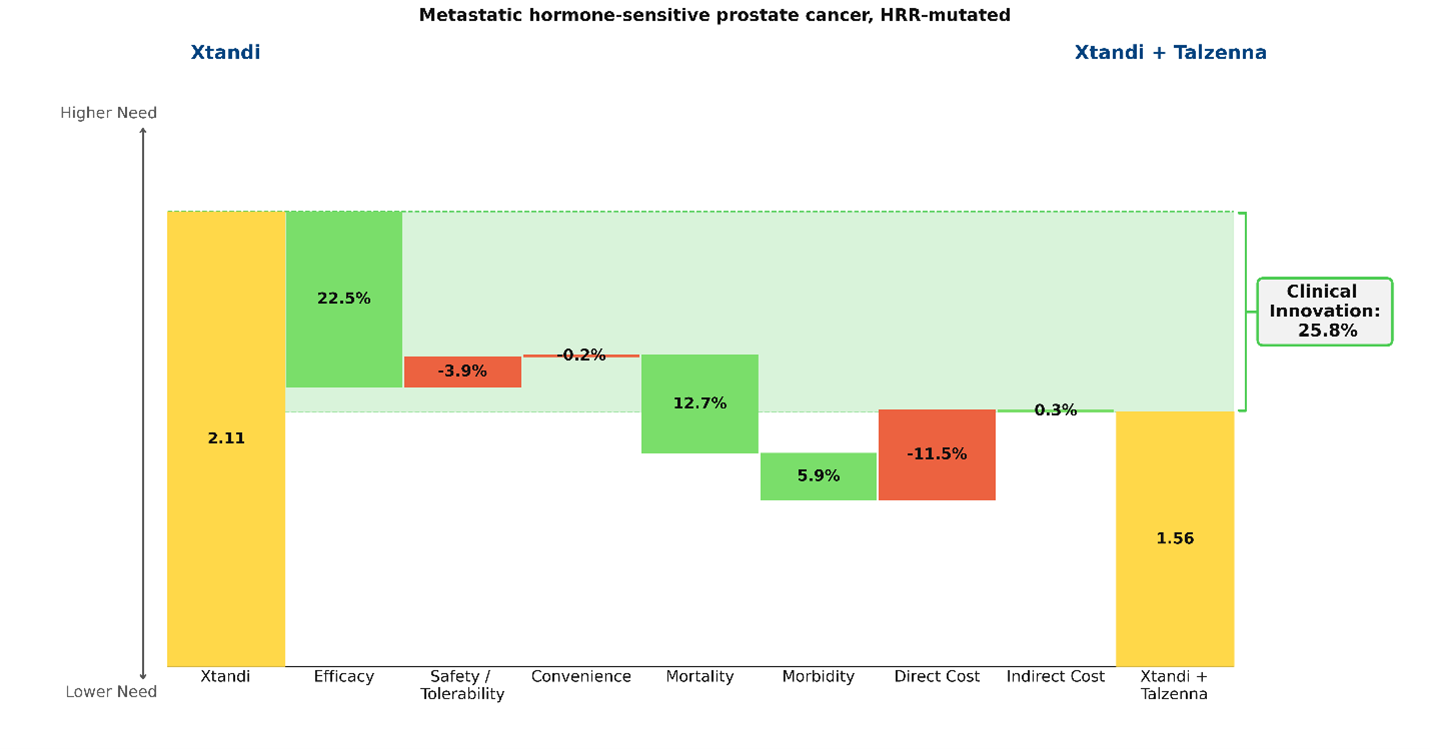
It remains to be seen whether the combination of Akeega’s 11-month head start and the 10-month wait until Xtandi goes off-patent will be enough for J&J to firmly establish their combo regimen as standard of care in BRCA2-mutant patients. In opposition to these efforts, Pfizer will be given a great opportunity to position its combo as the one-size-fits-all HRRm treatment, thus simplifying a physician’s decision tree.
[1] US Food and Drug Administration. FDA approves talazoparib with enzalutamide for metastatic androgen pathway modulation-naïve or -sensitive prostate cancer with HRR gene mutations. Published October 26, 2026. Accessed October 30, 2026.
[2] Attard G, Agarwal N, Graff JN, et al. Niraparib and abiraterone acetate plus prednisone for HRR-deficient metastatic castration-sensitive prostate cancer: a randomized phase 3 trial. Nat Med. 2025;31(12):4109-4118. doi:10.1038/s41591-025-03961-8
[3] Agarwal N, Matsubara N, Azad AA, et al. PARP and Androgen-Signaling Inhibition plus ADT in Metastatic Prostate Cancer. N Engl J Med. 2026;395(5):427-439. doi:10.1056/NEJMoa2604126