
BMS gains approval for first ever CELMoD, Zenbexus, in relapsed/refractory multiple myeloma and appears poised for the approval of one more
CELMoDs (cereblon E3 ligase modulators) are yet another advancement in the fast-growing space of targeted protein degraders. Unlike the currently-approved IMiDs (immunomodulatory drugs such as lenalidomide, pomalidomide, thalidomide), CELMoDs bind cereblon more potently and quickly, leading to cell death rather than growth arrest. [1] Zenbexus (iberdomide, Bristol Myers Squibb) became the first-in-class CELMoD when it was approved on August 13, 2026 in relapsed/refractory multiple myeloma based on interim MRD-negative complete response rate data in the Phase III EXCALIBER-RRMM trial. PFS data is expected to readout in November 2027. In addition to Zenbexus’ recent initial approval, there is another CELMoD, mezigdomide, in the BMS pipeline with a PDUFA date of May 13, 2027; the NDA for this drug is based on interim phase III data from the SUCCESSOR-2 trial in relapsed/refractory multiple myeloma.
Despite a CD-38-agnostic approval, Zenbexus was studied in the anti-CD38-naïve or sensitive population. Mezigdomide, on the other hand, is being looked at in anti-CD38-refractory patients, potentially positioning the 2nd to market CELMoD as a proven option following progression on standard 1L treatment, unlike its predecessor. These patients are left with fewer options, as anti-CD-38 drugs can no longer be integrated into their treatment. The SUCCESSOR-2 trial compared mezigdomide + Kyprolis + dexamethasone (MeziKd) vs. Kyprolis + dexamethasone (Kd), which does not contain an IMiD. According to the NCCN guidelines, Kd is considered “useful in certain circumstances” with a category 1 rating, meaning it should not be considered 2L+ standard of care, a title which belongs to Revlimid + Kd (KRd).
In the absence of a head-to-head overall and progression-free survival comparison between MeziKd and KRd, endpoints which are crucial to the analysis, we considered Revlimid’s pivotal ASPIRE trial, which also used Kd as the control arm, in order to triangulate the difference between the two regimens.
In the phase III ASPIRE trial, KRd posted an impressive 0.69 PFS hazard ratio vs Kd. [2] In the SUCCESSOR-2 trial, MeziKd topped that with an impressive 0.48 PFS hazard ratio vs. Kd along with a superior improvement in overall response rate. [3] These latter results came in a more heavily pretreated patient population, where large effect sizes are somewhat harder to come by due to acquired resistance. On the other hand, due to an increased side effect burden and drug cost, if MeziKd does not post a clearly superior, statistically significant improvement in overall survival vs. Kd beyond what KRd was able to reach, it would only achieve a 2.9% Clinical Innovation score when compared to KRd and would likely be viewed as undifferentiated by physicians. Therefore, the final OS readout will mark a pivotal moment in determining the fate of mezigdomide in this population.
Using our large historical database of oncology drugs and comparing the PFS hazard ratios achieved by both MeziKd and KRd, we project MeziKd to post a 36% reduction in mortality vs. Kd, far exceeding the 16% reduction in mortality achieved by KRd in the ASPIRE trial. If this materializes, MeziKd is looking at a 7.6% Clinical Innovation score, implying meaningful differentiation that is indicative of commercial success. (Figure 1)
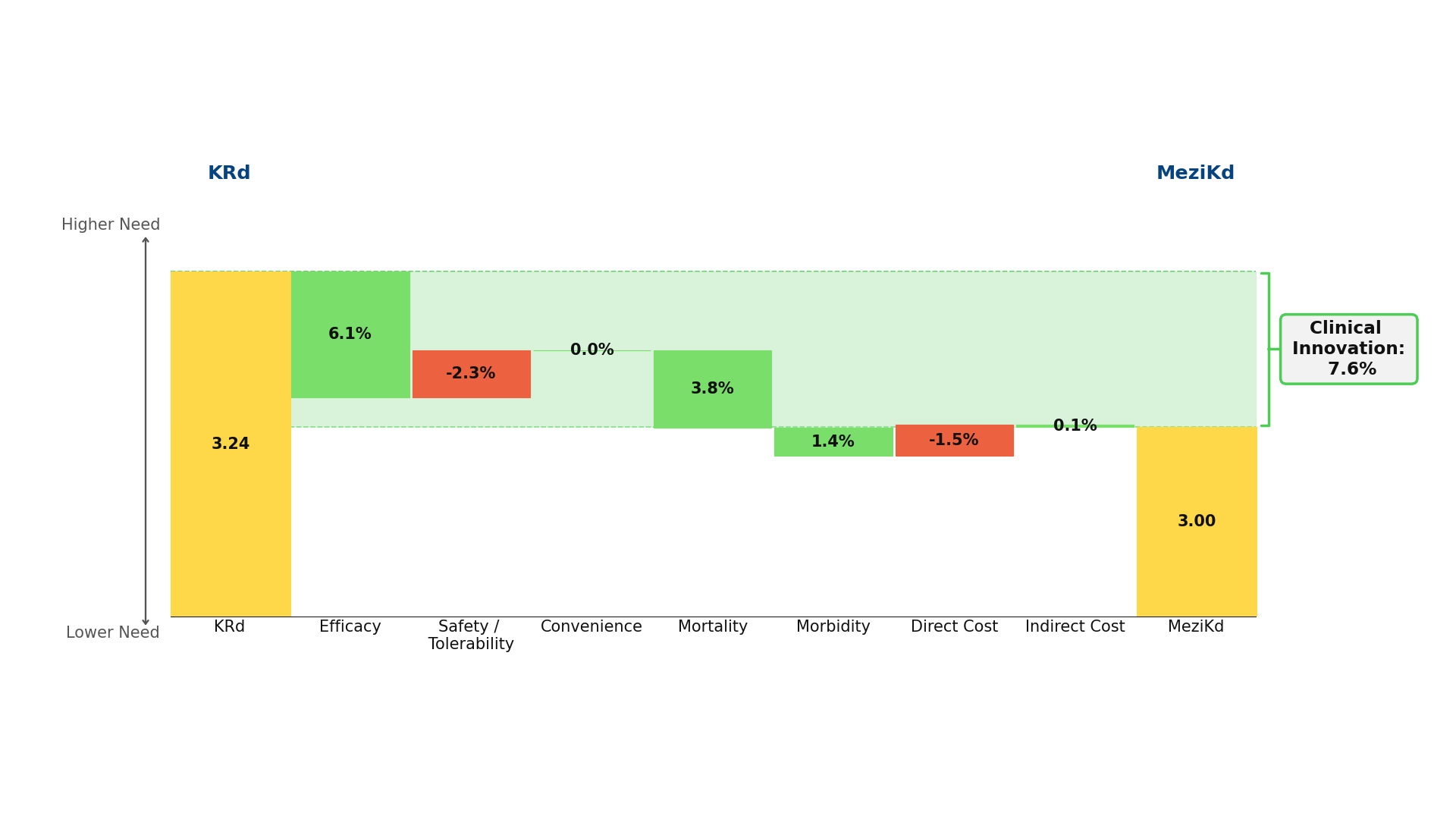
Figure 1: Drivers of Clinical Innovation for MeziKd vs. KRd
[1] Lonial S. CELMoDs: A Distinct Therapeutic Class for Relapsed Multiple Myeloma. Targeted Oncology. Published March 3, 2026. Accessed September 8, 2026. https://www.targetedonc.com/view/celmods-a-distinct-therapeutic-class-for-relapsed-multiple-myeloma
[2] Siegel DS, Dimopoulos MA, Ludwig H, et al. Improvement in Overall Survival With Carfilzomib, Lenalidomide, and Dexamethasone in Patients With Relapsed or Refractory Multiple Myeloma. J Clin Oncol. 2018;36(8):728-734. doi:10.1200/JCO.2017.76.5032
[3] Dimopoulos MA, Schjesvold F, Fu C, Hartley-Brown MA, Richardson PG. Mezigdomide, carfilzomib, and dexamethasone versus carfilzomib and dexamethasone in patients with relapsed or refractory multiple myeloma (SUCCESSOR-2): a phase 3, open-label, randomised controlled trial. The Lancet. 2026;408(10551):219-233. doi:10.1016/S0140-6736(26)01088-3.