
Lipfendra Brings PCSK9i Efficacy with Oral Convenience
Last week, Merck’s PCSK9 inhibitor, Lipfendra (enlicitide), was approved (1) for lowering LDL-C as an adjunct to diet and exercise in adults with hypercholesterolemia. PCSK9 inhibitors are powerful drugs that offer an add-on or monotherapy option for patients who have not reached their LDL-C goals on statins alone or who cannot tolerate statins.
Trials of other drugs, including Repatha (evolocumab, Amgen), have demonstrated that lowering LDL-C with statins or PCSK9 inhibitors can lower risk of major adverse cardiovascular events (MACE) in adults at increased risk for MACE (primary prevention) or who have already had a MACE (secondary prevention).
Lipfendra’s effect on cardiovascular outcomes is still being evaluated in the CORALreef Outcomes trial (2). Using existing data and reasonable assumptions about what future outcomes data may look like, the Equinox model can estimate how Lipfendra may measure up in primary and secondary prevention.
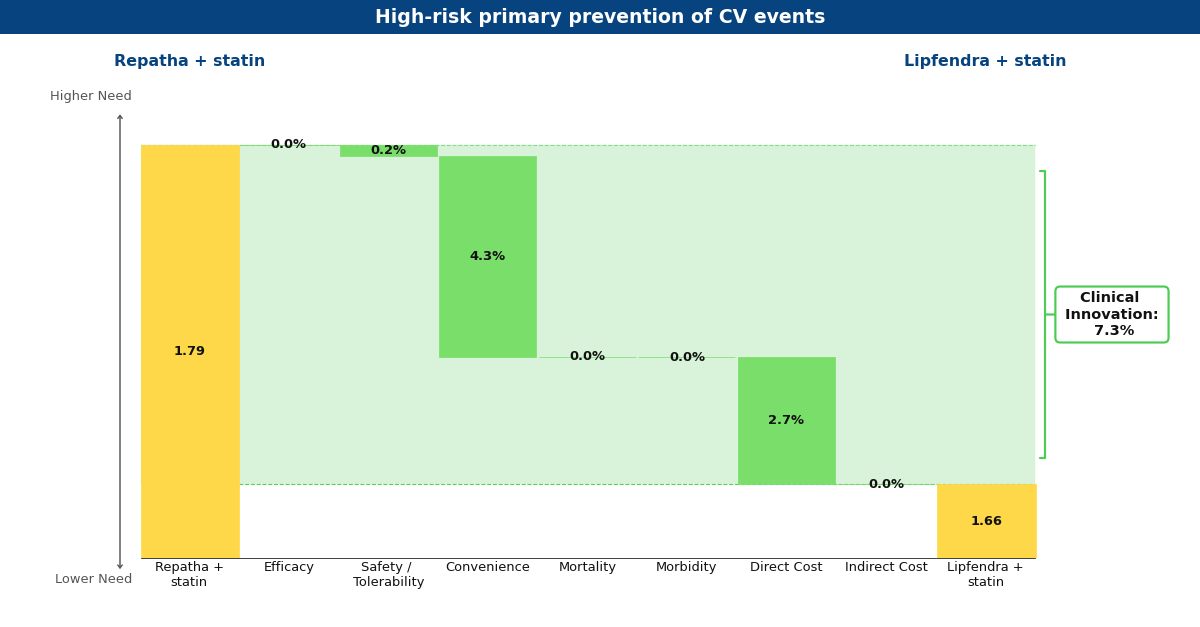
Drivers chart depicting what Equinox believes Lipfendra may look like in the future compared to Repatha for primary prevention of MACE in high-risk patients.
Lipfendra’s main driver of improvement is convenience, as it is the first approved oral PCSK9 inhibitor in a market of injectables. In Repatha’s Phase 3 MACE prevention trials (3, 4) and Lipfendra’s Phase 3 hypercholesterolemia trial (5), these drugs appeared to have a similar net-of-placebo effect on LDL-C reduction and both were well-tolerated. Based on these data, Equinox believes if Lipfendra were to be approved for primary and secondary prevention, it would be based on data demonstrating a similar tolerability and relative risk reduction in MACE as seen with Repatha.
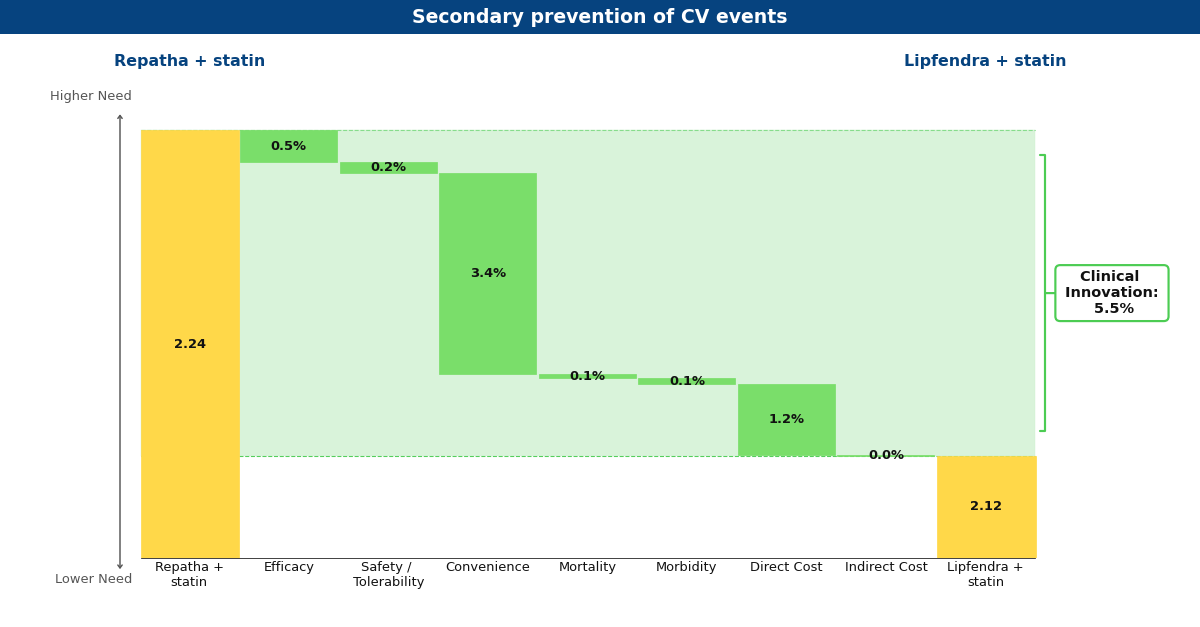
Drivers chart depicting what Equinox believes Lipfendra may look like in the future compared to Repatha for secondary prevention of MACE
Currently, Lipfendra has a substantially lower annual WAC than Repatha, resulting in overall innovation scores of 7.3% and 5.5% in primary and secondary prevention, respectively. We expect that the arrival of biosimilar Repatha will degrade this advantage somewhat, but Lipfendra would remain differentiated and commercially successful in both populations (at 6.1% and 5.0%).