
Rigel’s Veppanu scores its first nod in HER2-, ER+, ESR1-mutant locally-advanced or metastatic breast cancer, making it the first PROTAC approved
Veppanu (Rigel Pharmaceuticals) was approved by the FDA on May 1, 2026 and targets ESR1-mutations, which often arise following treatment with aromatase inhibitors, a staple in the 1L breast cancer paradigm. Its approval is based on the Phase III VERITAC-2 trial, run by Pfizer and its co-developer Arvinas, who licensed Veppanu to Rigel Pharmaceuticals in a $405 million milestone-based deal that officially closed on June 11, 2026. [1, 2]
Protein degraders are among the most exciting drug classes, with dozens of ongoing clinical development programs in a slew of indications from prostate and breast cancers all the way to Alzheimer’s and Parkinson’s Disease. Rather than merely blocking the active site or downstream signaling of an oncogenic protein like traditional small molecule inhibitors (SMIs), protein degraders cause their destruction. These drugs are effective at overcoming resistance mutations, but offer inferior pharmacokinetics when compared to SMIs.
The first monovalent protein degrader to be introduced in breast cancer was Faslodex (AstraZeneca), which was later followed by other selective estrogen receptor degraders (SERDs). While effective, these drugs bind to the estrogen receptor and are stoichiometric in nature, meaning each drug molecule indirectly leads to the destruction of exactly one estrogen receptor. PROTACS, or “bivalent protein degraders,” on the other hand, are catalytic in nature with each molecule directly causing the destruction of multiple estrogen receptors. This fast-acting and potent approach is expected to transform a variety of landscapes in the coming years.
Despite its mechanistic novelty, Veppanu has its work cut out for it as the PROTAC’s approval comes three years behind that of next-gen SERD Orserdu (Stemline Therapeutics) and one year behind Inluriyo (Eli Lilly and Company). Each next-gen agent displayed strong Clinical Innovation over the first-generation SERD, Faslodex in their respective trials (Figure 1A,B).
Veppanu likewise showcased a dominant performance over Faslodex, with a 0.57 hazard ratio for progression-free survival (p-value = 0.0001), establishing itself as a viable option in the space (Figure 1C). [3]
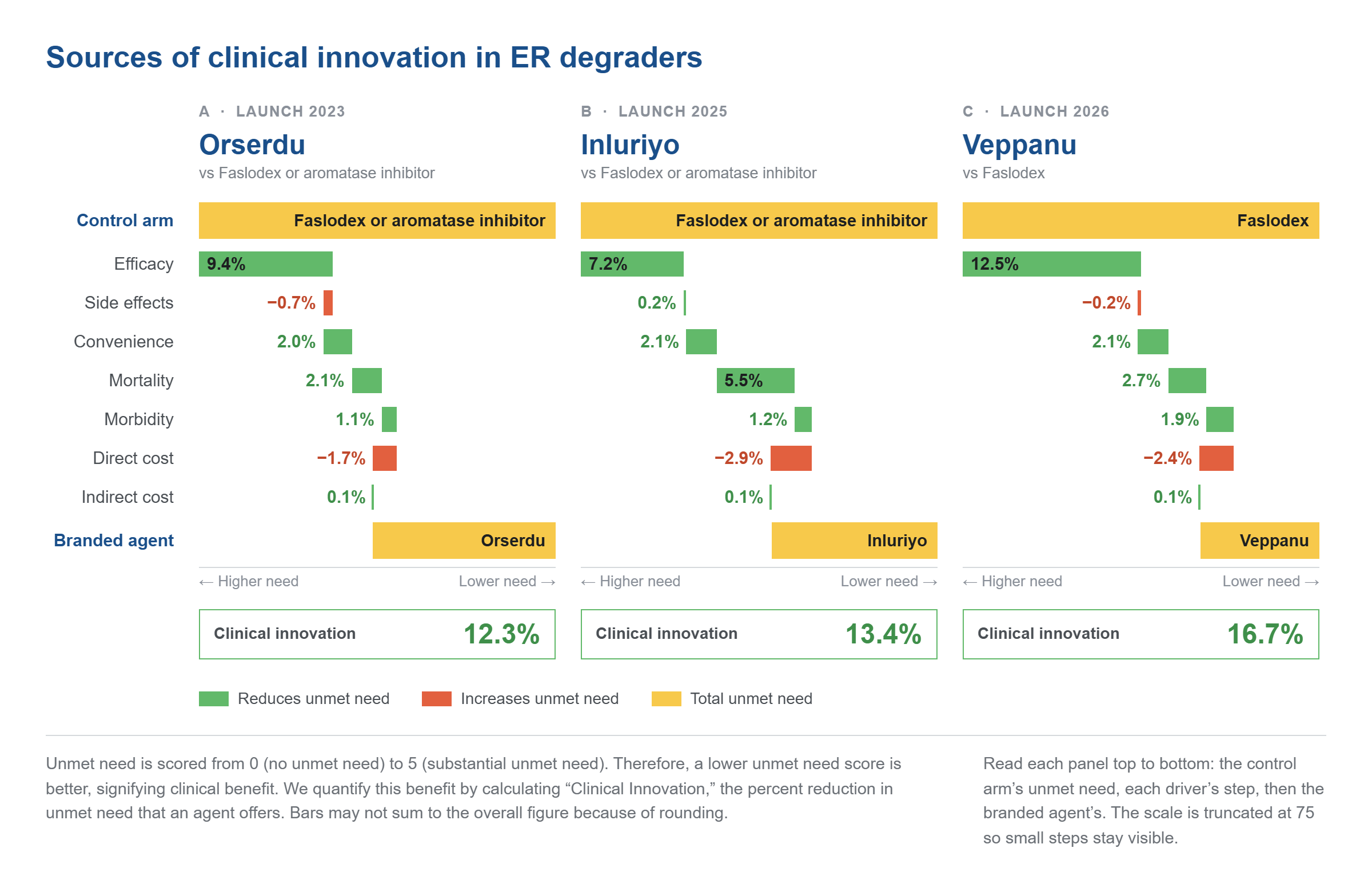
Figure 1: Drivers of Clinical Innovation for Each Protein Degrader, Each Compared with Its Respective Control Arm
However, when compared head-to-head with Inluriyo, there is little differentiation to speak of aside from slight efficacy gains, which are moderately clawed back due to cost. The result is a Clinical Innovation score of 1.6%, well below the traditional differentiation benchmark of 5%. Unless Veppanu is able to post a better-than-expected median overall survival when the endpoint matures, it will likely only split the branded market with Inluriyo and Orserdu (Figure 2).
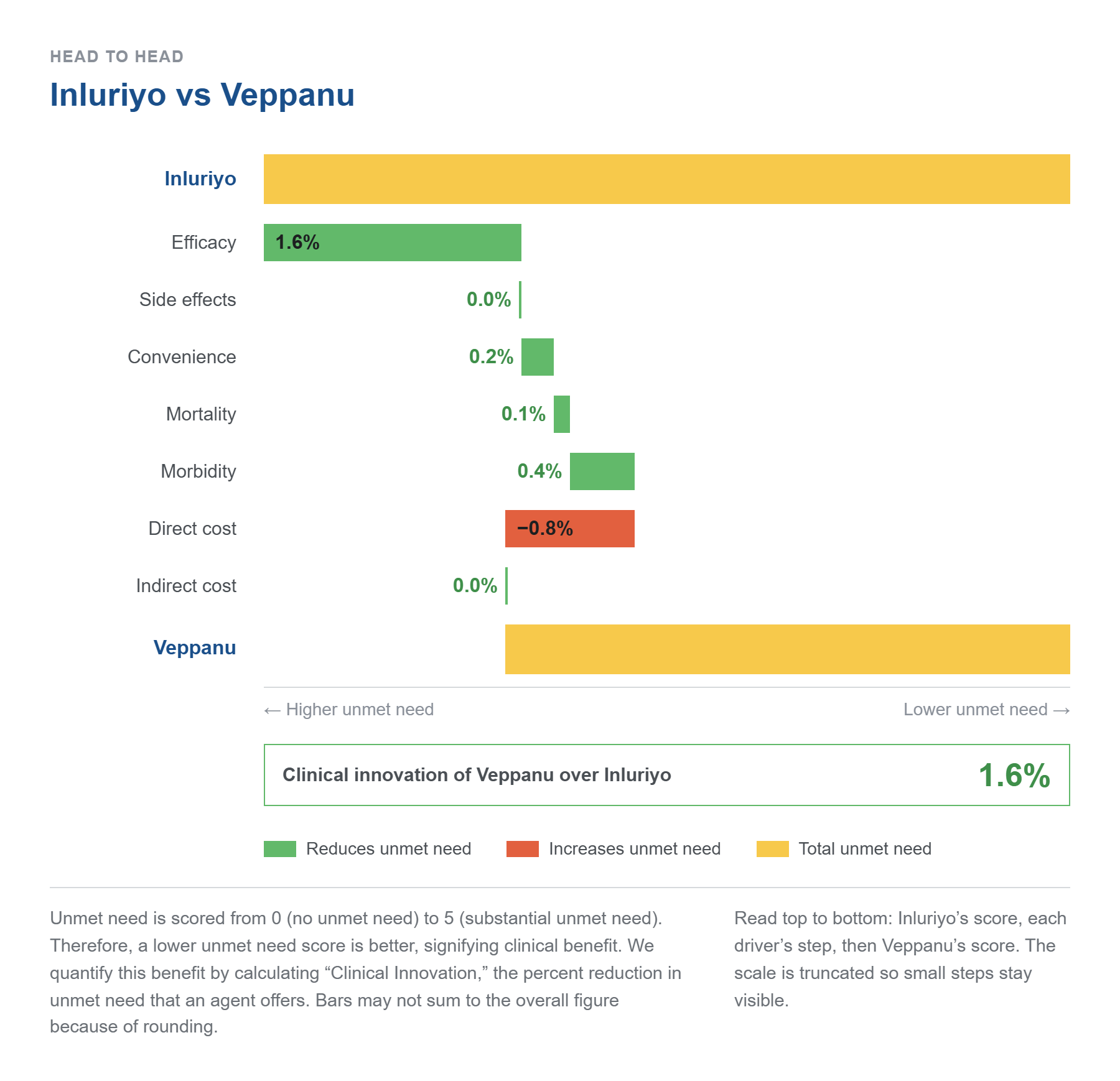
Figure 2: Drivers of Clinical Innovation, Veppanu vs. Inluriyo
Notwithstanding, this approval not only marks the beginning of an exciting development in pharmaceuticals, but also brings another treatment option to a historically underserved population.
[1] Pfizer. A Phase 3, Randomized, Open-Label, Multicenter Trial of ARV-471 (PF-07850327) vs Fulvestrant in Participants With Estrogen Receptor-Positive, HER2-Negative Advanced Breast Cancer Whose Disease Progressed After Prior Endocrine Based Treatment for Advanced Disease (VERITAC-2). ClinicalTrials.gov identifier: NCT05654623. Updated March 18, 2026. Accessed August 18, 2026. https://clinicaltrials.gov/study/NCT05654623
[2] Rigel enters exclusive global licensing agreement for VEPPANU (vepdegestrant), an oral PROTAC, for the treatment of 2L+ ER+/HER2-, ESR1m advanced or metastatic breast cancer. News release. Rigel Pharmaceuticals, Inc.; May 12, 2026. Accessed August 18, 2026. https://www.rigel.com/news-media/press-releases/detail/437/rigel-enters-exclusive-global-licensing-agreement-for
[3] FDA approves vepdegestrant for ER-positive, HER2-negative, ESR1-mutated advanced or metastatic breast cancer. US Food and Drug Administration. May 1, 2026. Accessed August 18, 2026. https://www.fda.gov/drugs/resources-information-approved-drugs/fda-approves-vepdegestrant-er-positive-her2-negative-esr1-mutated-advanced-or-metastatic-breast
Enhertu shows high clinical innovation in second-line metastatic breast cancer
Conclusion: Enhertu achieves impressive clinical innovation versus Kadcyla, the current SOC, in second-line HER2+ metastatic breast cancer, and in the newly defined HER2-low metastatic breast cancer population at second or later lines of therapy versus chemo.
Enhertu (trastuzumab deruxtecan, AstraZeneca) was approved[1] in December 2019 for HER2+ unresectable or metastatic breast cancer patients who have received multiple prior anti-HER2 treatments. In May 2022 the FDA approved Enhertu in second line HER2+ breast cancer, based on results from the DESTINY-Breast03[2] trial, which show impressive efficacy in the second-line setting in HER2+ unresectable or metastatic breast cancer.

In these patients, Enhertu boasts a significant increase in progression-free survival compared to the current standard of care (SOC), trastuzumab emtansine (Kadcyla) (25.1 vs. 9.6 months), and a notable improvement in overall response rate (79.7% vs. 43.6%). Coupled with a hazard ratio for death of 0.55, Enhertu appears poised to take over from Kadcyla in second-line HER2+ metastatic breast cancer.
The waterfall chart above shows that Enhertu’s improvements in efficacy far outweigh its slightly worse side effect profile when compared to Kadcyla. The jump in efficacy, as well as its trickle-down effect on mortality and morbidity, deliver a strong clinical innovation score of 25.9%. Drugs with clinical innovation above 10% usually dominate their segments; Enhertu’s improvement in this population is similar to Tagrisso’s advantage in second-line EGFR+ NSCLC.
We expect Enhertu to dominate treatment in this setting within two years.
Moreover, the FDA recently granted Enhertu Breakthrough Therapy Designation in patients with unresectable or metastatic HER2-low (IHC 1+ or IHC 2+/ISH-negative) breast cancer who received a prior systemic therapy in the metastatic setting or developed disease recurrence within six months of completing adjuvant chemotherapy. HR+ patients should additionally have received or be ineligible for endocrine therapy.
The DESTINY-Breast04[3] trial studied Enhertu versus investigator’s choice chemotherapy (e.g., eribulin) in 2L+ HER2-low metastatic breast cancer. Enhertu offers a significant increase in progression-free survival (9.9 vs. 5.1 months) and median overall survival (23.4 vs. 16.8 months) compared to chemo, and a dramatic improvement in overall response rate (52.3% vs. 16.3%). This trial could portend a paradigm shift in breast cancer classification, targeting the entirety of HER2 expression.
The waterfall chart below shows that Enhertu’s improvements in efficacy in HER2-low patients, and resultant impact on mortality and morbidity, offer strong clinical innovation of 14% compared to chemotherapy.

Enhertu is a transformative advance for HER2-low metastatic breast cancer patients, and should dominate the space in the near future.
[1] https://www.daiichisankyo.com/media/press_release/detail/index_3159.html